
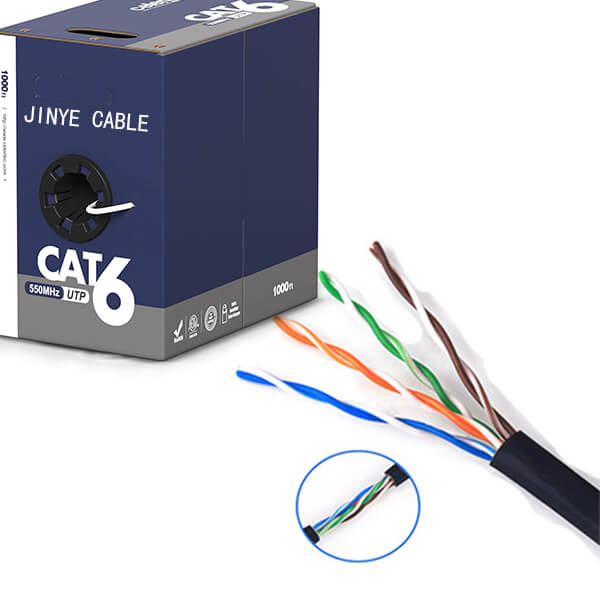
Our UTP Ethernet Cables are designed for stable, reliable, and cost-effective network installations.
From a manufacturer’s engineering perspective, high-quality UTP cables meet performance requirements in most residential, commercial, and standard project environments, while offering easier installation and lower system risk compared to shielded solutions.
As a factory, we recommend UTP Ethernet cables as the default choice for most network deployments.
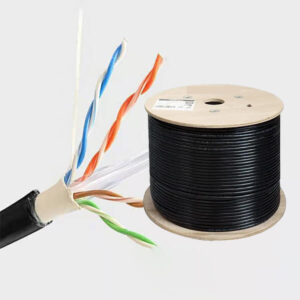
Product Specifications
Product Type:
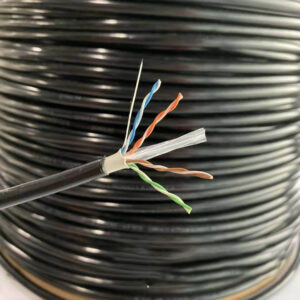
UTP (Unshielded Twisted Pair) Ethernet Cable
Categories Available:
CAT5e / CAT6 / CAT6A
Conductor:
-
Solid Bare Copper
-
CCA (Copper Clad Aluminum) – optional for cost-sensitive markets
Conductor Size:
-
CAT5e: 24AWG
-
CAT6: 23AWG
-
CAT6A: 23AWG
Insulation:
HDPE
Jacket Options:
PVC / PE/LSZH
Standard Compliance:
ISO/IEC 11801
ANSI/TIA-568
Packaging:
305m Pull Box / Wooden Drum / Customized Packing
Application:
Structured cabling systems, LAN networks, residential and commercial installations
Why Our Factory Recommends UTP Ethernet Cables
From a manufacturing and project experience perspective, UTP Ethernet cables provide the best balance between performance, reliability, and cost.
Modern UTP cables rely on precise twist ratios, conductor balance, and pair separation to minimize interference. In typical installation environments, this design is more than sufficient to deliver stable network performance without the complexity of shielding and grounding.
Based on real project feedback, approximately 90% of installations do not require shielded cabling.
Factory Cable Selection Logic
To help distributors, contractors, and project partners make confident decisions, we follow a clear recommendation logic:
-
Residential networks
→ CAT6 or CAT6A UTP is fully sufficient -
Standard office and commercial buildings
→ UTP remains the preferred solution -
Projects near heavy machinery or high-voltage equipment
→ Environmental evaluation is recommended before considering STP -
Special environments (data centers, medical facilities, laboratories)
→ Project-level technical assessment is advised
This approach helps avoid unnecessary system complexity and reduces installation risk.
Why UTP Is Often Better Than STP in Real Projects
From a factory standpoint, shielded cabling systems require:
-
Proper grounding at both ends
-
Matching shielded connectors and patch panels
-
Controlled installation practices
If any of these conditions are not met, shielding may offer little benefit while increasing the risk of performance issues or after-sales disputes.
For this reason, we do not recommend STP as a default option for standard projects.
Benefits for Distributors and Project Partners
By choosing our UTP Ethernet cables, partners benefit from:
-
Easier and faster installation
-
Lower total system cost
-
Reduced grounding-related issues
-
Stable and standards-compliant performance
-
Clear factory-backed recommendation logic
This makes UTP cables especially suitable for volume projects and distribution markets.
Typical Applications
-
Home networking
-
Office buildings
-
Schools and commercial centers
-
Hotels and residential compounds
-
General structured cabling projects
Manufacturer Commitment
As an Ethernet cable manufacturer, our responsibility goes beyond supplying products.
We aim to support our partners with clear application guidance, stable product quality, and long-term reliability.
Choosing the right cable—not the most complex one—is the key to building dependable network systems.
Contact Us
If you are unsure whether UTP or STP is more suitable for your project, our technical team is available to provide guidance based on your application and market needs

Reviews
There are no reviews yet.