

Cat6 Ethernet Cable vs Cat6e Ethernet Cable vs Cat6A Ethernet Cable
Choosing the right Ethernet cable is essential for network stability, speed, and future scalability. Among the most frequently compared options are Cat6, Cat6e, and Cat6A cables. While these names look similar, their technical background, performance guarantees, and application scenarios are quite different.
This revised version is based on the original article, with clearer explanations, corrected technical emphasis, and stronger guidance for buyers and project users.
1. What Do Cat6, Cat6e, and Cat6A Mean?
Cat6 Ethernet Cable (Standardized)
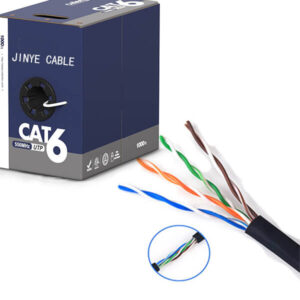
Cat6 (Category 6) is a formally recognized international standard defined by TIA/EIA and ISO/IEC.
Key characteristics:
- Bandwidth: 250 MHz
- Data rate: Up to 1 Gbps at 100 m
- Supports 10 Gbps up to ~55 m under controlled conditions
- Widely used in residential, commercial, and light industrial networks
Cat6 is a cost‑effective and reliable solution for Gigabit Ethernet environments.
Cat6e Ethernet Cable (Marketing Term, Not a Standard)
Cat6e (Category 6 enhanced) is not an officially recognized standard by TIA/EIA or ISO/IEC.
Important facts:
- “Cat6e” is a manufacturer‑defined marketing term
- There is no unified specification for frequency, crosstalk, or transmission distance
- Performance varies significantly between suppliers
In practice, some Cat6e cables may outperform basic Cat6 cables, but their performance cannot be guaranteed or certified due to the lack of an international standard.
Cat6A Ethernet Cable (Standardized, Enterprise‑Grade)
Cat6A (Category 6 Augmented) is a fully standardized upgrade of Cat6, designed for high‑speed and long‑distance transmission.
Key characteristics:
- Bandwidth: 500 MHz
- Data rate: 10 Gbps at full 100 m
- Enhanced protection against alien crosstalk (ANEXT)
- Thicker cable diameter, often with improved shielding
Cat6A is the preferred choice for data centers, enterprise networks, and future‑proof installations.
2. Performance Comparison
| Feature | Cat6 | Cat6e | Cat6A |
|---|---|---|---|
| International Standard | Yes | No | Yes |
| Typical Bandwidth | 250 MHz | Manufacturer‑defined | 500 MHz |
| 1 Gbps @ 100 m | Yes | Depends on supplier | Yes |
| 10 Gbps @ 100 m | No | Not guaranteed | Yes |
| Crosstalk Control | Standard | Uncertain | Excellent |
| Typical Applications | Homes, offices | Budget projects | Enterprise, data centers |
3. Why Cat6A Is More Stable Than Cat6
The key technical difference is alien crosstalk control. Cat6A has stricter requirements on:
- Pair separation
- Insulation thickness
- Overall cable structure
This allows Cat6A to maintain stable 10‑Gigabit performance across the full 100‑meter channel, something Cat6 cannot officially guarantee.
4. Is Cat6e Worth Considering?
Cat6e is not necessarily “bad,” but it is unpredictable.
Cat6e may be acceptable when:
- The supplier clearly provides test reports and specifications
- The project is cost‑sensitive
- Long‑distance 10 Gbps transmission is not required
However, for projects requiring certification, compliance, or long‑term reliability, Cat6e is generally not recommended.
5. Which Cable Should You Choose?
- Choose Cat6 if you need a stable, cost‑effective solution for Gigabit Ethernet in homes or offices.
- Avoid relying solely on the “Cat6e” name; always verify technical parameters and test data.
- Choose Cat6A if you require 10 Gbps performance, long cable runs, or future network upgrades.
6. Final Recommendation
7. Looking for a Reliable Ethernet Cable Supplier?
If you are sourcing Cat6 or Cat6A Ethernet cables for wholesale, OEM branding, or project deployment, working with a qualified manufacturer is critical.
What we offer:
- Bulk supply for Cat5e, Cat6, and Cat6A Ethernet cables
- OEM & private label support
- Stable quality control and batch consistency
- Support for project-based and long-term supply cooperation
📩 Contact our sales team to receive:
- Latest product catalog
- Technical specifications and test reports
- Competitive quotation based on your target market
Our team will respond promptly with a tailored solution for your application.
Cat6 and Cat6A are official, standardized Ethernet cable categories with clear performance guarantees. Cat6e, on the other hand, is a non‑standard designation whose quality depends entirely on the manufacturer.
For professional projects, structured cabling, and long‑term investments, Cat6A remains the safest and most future‑proof option.
If you are sourcing Ethernet cables for wholesale, OEM, or project deployment, always request:
- Test reports
- Conductor material details
- Compliance documentation
This ensures the cable performs as expected in real‑world applications.


Reviews
There are no reviews yet.